

Want to know the exact system to scale your business to 7+ figures?
CLICK HERE TO LEARN MORE
Episode Highlights:
- Learn how Nick boosted his fill rate from a mere 24% to an impressive 73%
- Uncover the “10-5-1” magic formula that revolutionised their recruitment process
- Explore the counterintuitive approach of reducing vacancies by 46% while doubling profits
Episode Summary:
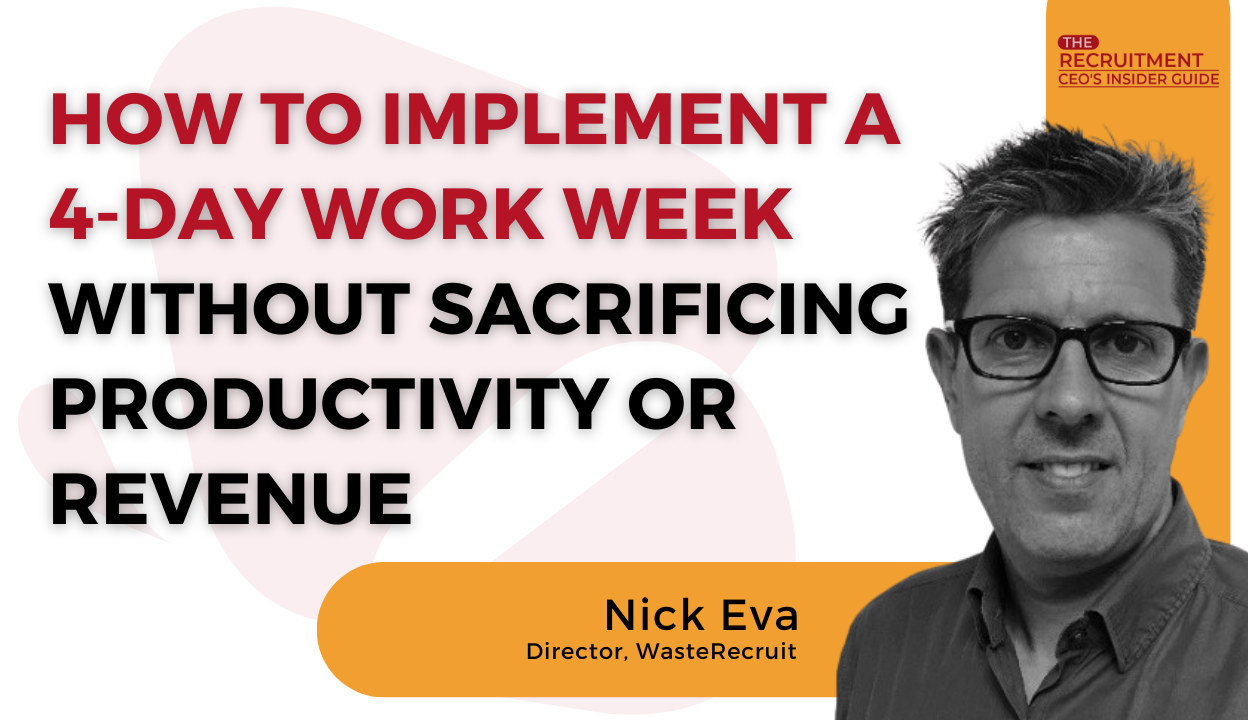
Are you struggling to scale your recruitment business? In this episode of the Recruitment CEO’s Insider Guide podcast, Nick Eva shares his remarkable journey from operational grind to strategic success. Discover how he transformed his company, Waste Recruit, by making bold changes that led to a 60% revenue increase and the implementation of a four-day workweek.
Tune in to this game-changing episode and gain valuable insights that could transform your recruitment business. Whether you’re a seasoned CEO or just starting out, Nick’s story will inspire you to rethink your strategies and aim for extraordinary results.
▬▬▬▬▬▬▬▬▬▬▬▬▬▬▬▬▬▬▬▬▬▬▬▬▬▬▬▬▬▬▬▬▬▬▬▬▬▬▬▬

▬▬▬▬▬▬▬▬▬▬▬▬▬▬▬▬▬▬▬▬▬▬▬▬▬▬▬▬▬▬▬▬▬▬▬▬▬▬▬▬
WANT TO CHAT IT OUT?
Let’s have a chat to see IF or HOW this can work for your recruitment or executive search business, apply here and give me some details about your business:
CLICK HERE TO APPLY FOR A PROFIT ACCELERATOR SESSION
▬▬▬▬▬▬▬▬▬▬▬▬▬▬▬▬▬▬▬▬▬▬▬▬▬▬▬▬▬▬▬▬▬▬▬▬▬▬▬▬
Expanded Episode Notes
Overview of Waste Recruit
Nick Eva as Managing Director of an International Waste Management Recruitment Company
Nick Eva introduced himself as the Managing Director of Waste Recruit, a specialist recruitment company focusing on the waste management and environmental sectors. Waste Recruit was established in 2003, and operates on both national and international scale, serving clients wherever waste management expertise is needed. Nick’s role as Managing Director involves overseeing the entire operation, from strategic decision-making to client relationships and business development.
The international scope of Waste Recruit’s operations highlights the global nature of the waste management industry and the company’s ability to source talent across borders. Nick emphasised that their expertise extends beyond simple placement services, encompassing a deep understanding of the waste management sector and its unique challenges. This specialisation has allowed Waste Recruit to establish itself as a key player in a niche market, providing valuable services to clients dealing with complex environmental and sustainability issues.
Business Being Profitable but Not Optimised Before Coaching
Nick candidly shared that prior to engaging in coaching, Waste Recruit was profitable but far from optimised. He described a situation where the company was generating decent revenue and turning a profit, but there was a nagging sense that they were working harder than necessary for the results they were achieving. Nick admitted that he was deeply involved in day-to-day operations, often working long hours and struggling to step back and view the business strategically.
This pre-coaching scenario is common among many small to medium-sized recruitment agencies, where the focus is often on maintaining cashflow and meeting immediate client needs rather than on long-term strategy and efficiency. Nick explained that while they were doing “alright” in terms of revenue and profit, there was a lack of focus on key performance indicators and a clear strategy for growth. This realisation was a key driver in seeking external support and ultimately engaging in coaching to transform the business.
Understanding the Reasons for Not Filling More Vacancies
One of the critical issues Nick identified in Waste Recruit’s pre-coaching operations was the low fill rate for vacancies. He shared that they were working on 350 to 400 vacancies annually but only filling about 20% of them. This low success rate was a source of frustration and inefficiency, consuming significant resources without proportionate returns.
Nick admitted that before the coaching process, they hadn’t really dug into the reasons behind this low fill rate. The company was caught in a cycle of taking on large volumes of vacancies without a strategic approach to selection or fulfilment. This lack of analysis meant they were unable to identify patterns or implement targeted improvements. The realisation that they needed to understand why they weren’t filling more vacancies became a crucial turning point, prompting a deeper examination of their processes and client relationships.
Changes in Recruitment Processes
Introduction of Business Psychology
Nick Eva’s company, Waste Recruit, underwent a significant transformation by incorporating business psychology into their recruitment processes. This shift allowed them to delve deeper into understanding candidates’ personalities, cognitive abilities, and potential fit within client organisations. By leveraging his brother Ben’s expertise in business psychology, Nick was able to offer clients a more comprehensive and insightful recruitment service. This approach not only improved the quality of placements but also differentiated Waste Recruit from competitors still relying on traditional recruitment methods.
The introduction of business psychology enabled Waste Recruit to provide clients with data-driven insights about candidates, moving beyond subjective judgments based solely on CVs and interviews. This scientific approach to recruitment resonated particularly well with owner-managers of waste management companies, who appreciated the potential for reduced turnover and improved performance that came with more precise candidate matching.
Implementation of Psychometric Assessments
Psychometric assessments became a cornerstone of Waste Recruit’s enhanced service offering. These assessments provided objective measurements of candidates’ abilities, personality traits, and potential cultural fit within client organisations. Nick and his team were able to use these tools to create a more robust and reliable selection process, significantly improving their placement success rates.
The implementation of psychometric assessments also allowed Waste Recruit to add value to their clients’ hiring processes. By providing detailed reports on candidates’ strengths, potential areas for development, and overall suitability for specific roles, they enabled clients to make more informed hiring decisions. This approach was particularly valuable for senior-level placements, where the impact of a hiring decision could be substantial for the client’s business.
Successful Hires Without Meeting Candidates in Person
One of the most striking outcomes of Waste Recruit’s evolved recruitment process was their ability to successfully place candidates without face-to-face meetings. Nick shared an example of a client based in France who hired two salespeople based solely on virtual interviews and Waste Recruit’s comprehensive assessment process. This level of trust in their recruitment methodology was a testament to the effectiveness of their psychometric assessments, structured interview process, and overall approach to candidate evaluation.
The success of these remote hires highlighted the strength of Waste Recruit’s process-driven approach. By providing clients with detailed insights into candidates’ capabilities, personality traits, and potential fit, they were able to instill confidence in hiring decisions even without traditional in-person interactions. This shift not only showcased the adaptability of Waste Recruit’s services but also pointed towards a potential future where remote hiring becomes more commonplace in the recruitment industry.
Impact of COVID-19 on the Business
Business at Risk of Folding Pre-COVID Without Changes
Nick Eva candidly shared that if Waste Recruit hadn’t implemented the strategic changes prior to the COVID-19 pandemic, the business would likely have folded. The shift from a high-volume, low-success-rate model to a more focused, quality-driven approach proved to be crucial in weathering the storm. By moving away from contingency recruitment and towards retained searches and consultancy projects, Waste Recruit built a more resilient business model that could withstand market disruptions.
The emphasis on building stronger relationships with key clients and offering high-value services meant that Waste Recruit was not as vulnerable to the sudden downturn in hiring that many traditional recruitment agencies experienced during the early stages of the pandemic. The changes implemented, such as focusing on ‘gold jobs’ and improving their selection processes, had positioned the company to be more adaptable and less reliant on a high volume of placements to remain profitable.
Team’s Ability to Manage During Nick’s Illness
One of the most striking revelations from Nick’s account was how the business continued to function effectively even when he was severely ill with COVID-19 for six months. This period, where Nick was only able to work for about three hours a day, demonstrated the robustness of the systems and processes that had been put in place. The team’s ability to manage the business in Nick’s absence was a testament to the success of the structural changes and the empowerment of staff members.
Nick’s illness inadvertently served as a stress test for the business, proving that Waste Recruit had successfully transitioned from being overly dependent on its founder to having a team capable of running operations independently. This resilience was a direct result of the clear roles and responsibilities that had been established, particularly the shift of Nick’s role from day-to-day operations to strategic business development. The team’s success during this challenging period reinforced the value of the organisational changes that had been implemented.
Positive Changes in Business Model Leading to Better Performance
The transformation of Waste Recruit’s business model, which began before the pandemic, led to improved performance even in the face of unprecedented challenges. Nick highlighted that the focus on retained work and high-value consultancy projects resulted in a significant increase in the fill rate of vacancies. The company moved from working on over 350 vacancies per year with a 24% fill rate to handling 191 vacancies with a 73% fill rate in 2023.
This dramatic improvement in efficiency and effectiveness translated into tangible financial benefits. Nick reported a 60% increase in revenue since 2017, despite working on fewer overall vacancies. The shift towards retained work was particularly successful, with 100% of retained vacancies being filled. These positive changes not only improved the company’s financial performance but also allowed for better work-life balance, including the implementation of a four-day workweek without a reduction in pay. The success of these changes demonstrated that by focusing on quality over quantity and developing deeper client relationships, recruitment businesses can achieve better results and greater resilience in challenging times.
Business Metrics and Performance
Increase in Retainer Fill Rates and Overall Revenue Since 2017
Nick Eva shared impressive statistics demonstrating the substantial improvement in Waste Recruit’s performance since implementing changes in 2017. The most striking metric was the dramatic increase in fill rates for retained vacancies, which reached an impressive 100%. This perfect fill rate for retained work showcased the effectiveness of their new approach, which combined thorough client engagement, psychometric assessments, and a more selective process for taking on assignments.
The overall revenue of the business saw a significant boost as well, with Nick reporting a 60% increase since 2017. This growth was particularly noteworthy given that it occurred alongside a reduction in the total number of vacancies worked on. The shift towards higher-value, retained work allowed Waste Recruit to generate more revenue from fewer placements, improving both efficiency and profitability. This transformation demonstrated that a strategic pivot towards quality over quantity could yield substantial financial benefits in the recruitment industry.
Average Fee of 15% and 24% Fill Rate
Nick provided insight into Waste Recruit’s performance metrics before the implementation of their new strategies. Initially, the company was operating with an average fee of 15% and a fill rate of just 24%. These figures were indicative of the challenges faced by many recruitment agencies operating primarily on a contingency basis, where a large volume of vacancies are worked on with a relatively low success rate.
This baseline performance served as a stark contrast to the improved metrics achieved after the business transformation. The low fill rate of 24% highlighted the inefficiencies in the previous model, where significant time and resources were invested in vacancies that didn’t result in placements. Recognising these challenges was a crucial step in Nick’s journey to reshape Waste Recruit’s approach and focus on more profitable, higher-success-rate opportunities.
Analysis of Vacancies and the Importance of “Gold Vacancies”
A key element of Waste Recruit’s transformation was the implementation of a rigorous analysis of vacancies to identify what Nick termed “gold vacancies”. This process involved a detailed examination of historical data to understand which types of roles and clients yielded the best results. Nick emphasised the importance of being selective about which vacancies to work on, moving away from the traditional recruitment approach of taking on every possible job.
The concept of “gold vacancies” typically referred to roles where Waste Recruit could secure sole agency or retained agreements. Data showed that these vacancies had significantly higher fill rates – 67% for sole agency and 100% for retained work, compared to just 34% for traditional contingency roles. This analysis allowed the team to focus their efforts on the most promising opportunities, leading to better resource allocation and improved overall performance.
Consultant Doubling Revenue by Focusing on Specific Vacancies
Nick shared a compelling example of how the new approach benefited individual consultants within the business. He described how one of his top performers doubled his revenue by adopting the strategy of focusing on specific, high-quality vacancies. This consultant transitioned from working on a large number of contingency roles to concentrating on sole agency and retained assignments.
The success of this consultant underscored the effectiveness of the new business model. By being more selective about which vacancies to work on and investing more time in understanding client needs and candidate fit, the consultant was able to achieve a much higher success rate. This not only led to increased revenue but also improved job satisfaction, as the consultant could see more tangible results from his efforts. The example served as a powerful illustration of how strategic changes at the organisational level could translate into significant improvements in individual performance and motivation.
Transition and Focus Changes in Recruitment
Transition from Non-Sole Agency to Sole Agency Vacancies
Nick Eva detailed the strategic shift Waste Recruit undertook in moving away from non-sole agency vacancies towards a model that prioritised sole agency arrangements. This transition was driven by the realisation that sole agency vacancies yielded significantly better results, with fill rates more than doubling compared to those of non-sole agency roles. Nick explained that this change required a concerted effort to educate clients about the benefits of working exclusively with Waste Recruit, often involving face-to-face meetings and detailed explanations of their enhanced recruitment process.
The move towards sole agency work wasn’t without its challenges. Nick described how, in some cases, they had to be willing to negotiate on fees initially to secure sole agency agreements. However, the long-term benefits of this approach quickly became apparent. With sole agency roles, Waste Recruit could invest more time and resources into understanding the client’s needs, thoroughly vetting candidates, and ultimately providing a higher quality of service. This approach not only improved fill rates but also strengthened client relationships, leading to more consistent and predictable revenue streams.
Emphasis on Understanding Clients and Changing the Business Model
A crucial aspect of Waste Recruit’s transformation was the renewed emphasis on deeply understanding their clients’ businesses and needs. Nick highlighted how this shift required a change in mindset, moving from a transactional approach to a more consultative one. He and his team invested significant time in learning about their clients’ industries, particularly in the waste management and environmental sectors, to position themselves as true partners rather than mere service providers.
This deeper understanding of clients facilitated the evolution of Waste Recruit’s business model. Nick explained how they began to offer more comprehensive recruitment solutions, including psychometric assessments, tailored interview processes, and even recruitment strategy consulting. By demonstrating a thorough understanding of their clients’ businesses and challenges, Waste Recruit was able to justify higher fees and secure more retained work. This approach not only differentiated them in a competitive market but also allowed them to add more value to their clients’ hiring processes, resulting in stronger, longer-lasting partnerships.
Honest Conversations About the Quality of Vacancies
One of the most challenging aspects of Waste Recruit’s transformation, as Nick candidly shared, was initiating honest conversations within the team about the quality of vacancies they were working on. This involved a critical evaluation of each role to determine whether it met their newly established criteria for “gold vacancies”. Nick described how these conversations were initially met with resistance, as consultants were accustomed to working on any vacancy that came their way.
To facilitate this change, Nick implemented a rigorous analysis process, examining factors such as the likelihood of filling the role, the potential fee, and the strategic value of the client relationship. He encouraged his team to be more selective, even if it meant turning down work that didn’t meet their criteria. While this approach was initially challenging for some team members, Nick emphasised how it ultimately led to better outcomes for both the consultants and the business. By focusing on high-quality vacancies, consultants were able to invest their time more effectively, leading to higher success rates and, consequently, increased job satisfaction and earnings.
Operational and Strategic Changes
Moving Away from Operational Tasks to Strategic Leadership
Nick Eva described a significant shift in his role within Waste Recruit, transitioning from being deeply involved in day-to-day operations to focusing on strategic leadership. This change was crucial for the company’s growth and efficiency. Nick explained how he gradually stepped back from hands-on recruitment tasks, delegating these responsibilities to his team members who were often more skilled in specific areas of the recruitment process.
By freeing himself from operational duties, Nick was able to dedicate more time to high-level decision-making, client relationship management, and business development. This strategic move allowed him to take a broader view of the company’s direction and implement long-term improvements. Nick emphasised how this shift not only benefited the business but also improved his own work satisfaction, as he could focus on areas where he could add the most value. The transition also empowered his team members, giving them more responsibility and opportunities for growth within their roles.
Implementation of a 4-Day Work Week
One of the most innovative changes Nick implemented at Waste Recruit was the introduction of a 4-day work week. This decision was made without reducing pay or increasing daily working hours, demonstrating a commitment to improving work-life balance for the entire team. Nick explained that this change was possible due to the increased efficiency and profitability achieved through their new business model and focus on high-value, retained work.
The implementation of the 4-day week was carefully planned to ensure continuous coverage for clients. Nick described how they split the team, with half taking Thursdays off and the other half taking Fridays, ensuring that the business remained operational five days a week. This approach not only improved employee satisfaction and well-being but also served as a powerful
recruitment and retention tool for Waste Recruit. Nick noted that the change had a positive impact on productivity, with team members often accomplishing more in four days than they previously did in five.
Optimising Team Structure and Doubling Profits
Nick shared how optimising the team structure played a crucial role in Waste Recruit’s transformation and subsequent doubling of profits. This process involved a careful analysis of each team member’s strengths and realigning roles to best utilise these strengths. For instance, Nick described how he shifted his focus to business development and client relationships, while other team members specialised in areas like candidate sourcing or psychometric assessments.
The restructuring also involved creating clearer career paths within the organisation and providing team members with more autonomy in their roles. This approach not only improved efficiency but also increased job satisfaction and reduced turnover within the team. Nick emphasised how this optimised structure, combined with the focus on high-value work, directly contributed to the doubling of the company’s profits. The increased profitability allowed for reinvestment in the business, further improving their services and technology infrastructure.
Insights from Coaching Leading to Better Business Understanding and Efficiency
Nick credited much of Waste Recruit’s successful transformation to the insights gained through coaching sessions with Katy, Nicky, and their team. He described how these sessions challenged him to question long-held assumptions about the recruitment industry and his own business practices. The coaching process encouraged Nick to delve deeper into his business metrics, analysing data in ways he hadn’t previously considered.
Through these coaching insights, Nick developed a better understanding of which activities were truly driving profitability and which were merely keeping the team busy without adding significant value. This led to more informed decision-making and a more strategic approach to client selection and service offerings. Nick emphasised how the coaching process not only provided valuable external perspectives but also gave him the confidence to implement significant changes, such as the transition to a 4-day work week and the focus on retained work. The ongoing support and challenge provided by the coaching relationship were instrumental in sustaining the momentum of change and continually refining Waste Recruit’s approach to achieve greater efficiency and profitability.