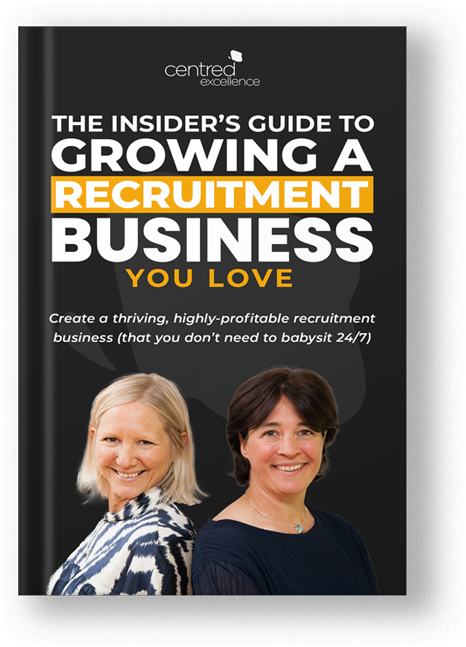

To develop the mindset of a multiple seven-figure recruitment business owner, begin by nurturing a positive outlook and a growth mindset. Embrace challenges as learning opportunities and transform obstacles into chances for success. Master strategic decision-making through goal setting and smart budgeting because money should work as hard as you do. Aim for high emotional intelligence to lead with empathy, and resist the urge to micromanage—empower your team to excel. Consider yourself a lifelong learner, always adapting to market shifts and seeking innovation. And remember, without a dash of risk, even the most seasoned entrepreneurs won't reach the stars.
Key Points
- Cultivate a growth mindset to view challenges as learning opportunities, enhancing innovation and resilience in the recruitment industry.
- Embrace the 'hell yes or hell no' approach to focus on high-value opportunities and reduce decision fatigue.
- Develop strategic financial acumen through regular financial reviews and effective cash flow management to support sustainable growth.
- Leverage emotional intelligence for effective leadership, fostering a positive workplace culture and enhancing employee satisfaction and retention.
- Encourage a culture of continuous learning and adaptability to navigate market shifts and foster business evolution.
Importance of Mindset
In the dynamic terrain of recruitment, the mindset of a business owner plays a pivotal role in determining success. A positive mindset is not just a buzzword; it's an essential ingredient for any recruitment business owner aiming to thrive in a competitive market. This mindset correlates with higher resilience, adaptability, motivation, and productivity.
Imagine facing a market challenge and seeing it as a puzzle to solve rather than a roadblock. That's the power of a positive mindset—it transforms challenges into opportunities.
Recruitment business owners who succeed often adopt a 'hell yes or hell no' decision-making approach. This method simplifies choices, reduces decision fatigue, and directs focus towards high-value opportunities. It's like having a mental GPS that steers you away from unnecessary detours and towards your destination.
Emphasising learning from setbacks is also vital. By viewing challenges as growth opportunities, business owners can enhance their long-term success and operational effectiveness.
It's like turning lemons into lemonade, but with fewer calories and more business acumen! This mindset fuels not just the growth of the business but also guarantees personal fulfilment and satisfaction in the journey of entrepreneurship.
Overcoming Limiting Beliefs
Often, recruitment business owners find themselves hindered by limiting beliefs that act as invisible barriers to their success. These beliefs, such as feeling "not good enough," can make it difficult to take necessary risks or pursue promising opportunities.
Remember, even the most successful business owners have faced self-doubt and fears in the past. It's essential to ensure these feelings do not hold you back from making bold decisions that could lead to expansion and innovation.
Fear of failure is another common obstacle, often preventing entrepreneurs from stepping outside their comfort zones. To overcome this, recognise that every successful person has faced setbacks, and these challenges often pave the way for growth.
Self-doubt can also impact your confidence, which in turn affects your ability to sell effectively and build strong relationships with clients and candidates.
Moreover, time constraints are often seen as a limiting belief. While it might seem like there's never enough time, effective time management and prioritisation can lead to more productive outcomes.
Finally, addressing personal financial management issues can help alleviate external recruitment challenges, fostering resilience.
Strategic Decision-Making
Strategic decision-making is the backbone of any successful multiple 7-figure recruitment business. It involves crafting clear objectives and key performance indicators (KPIs) that align with the company's grand vision.
Imagine this: you're steering a ship, and your KPIs are the compass guaranteeing you stay on course towards long-term growth. By setting these markers, you create a roadmap that guides measurable progress and accountability within your team, addressing team needs effectively.
Now, let's sprinkle a bit of fun into this serious business with the 'hell yes or hell no' approach. This method cuts through the noise, making strategic decision-making as clear as a sunny day. It keeps actions focused on what truly aligns with the business's vision and values, saving you from the murky waters of indecision.
Furthermore, staying nimble is key. Regularly reviewing strategies based on market feedback and performance metrics guarantees your recruitment business remains competitive.
A culture of open communication invites team members to share insights, turning collective wisdom into informed decisions.
Lastly, don't neglect the data. Utilising data-driven insights uncovers trends and opportunities, enabling you to make proactive decisions that fuel sustainable growth and operational efficiency.
Traits of Successful Owners
In the dynamic world of recruitment, successful business owners are like seasoned jugglers, balancing discipline and visionary thinking with finesse.
They wield high emotional intelligence to lead teams effectively, all whilst embracing risk and adaptability to navigate industry shifts.
With a strategic eye for future trends and a knack for clear communication, these leaders position their businesses to seize opportunities and foster lasting growth.
Discipline and Visionary Thinking
Successful recruitment business owners are characterised by two pivotal traits: self-discipline and visionary thinking. These qualities are like the dynamic duo of entrepreneurship, working hand-in-hand to steer businesses towards success.
Self-discipline is that inner drill sergeant, keeping the owner on track, ensuring deadlines are met, and strategic plans are followed through, even when daily challenges try to throw them off course. Visionary thinking, on the other hand, is the creative genius that spots emerging market trends and opportunities, making sure the business doesn't just keep up with the competition but actually sets the pace.
Research shows that disciplined leaders are 20% more likely to achieve their business objectives, which is quite the incentive to keep those discipline muscles flexed. Meanwhile, visionary thinking allows owners to set clear, ambitious goals, crafting a compelling vision that rallies their teams to work towards shared success.
This powerful combo not only fosters resilience but also equips business owners to adapt and innovate, ensuring growth and profitability. So, if you're dreaming of a 7-figure recruitment business, remember: a little self-discipline and a splash of visionary thinking can make all the difference.
And yes, coffee helps too!
Emotional Intelligence in Leadership
Mastering emotional intelligence in leadership is essential for recruitment business owners aiming for long-term success. Emotional intelligence (EI) enhances the ability to understand and manage one's emotions, as well as those of the team, creating a positive work atmosphere.
Leaders with high EI are like emotional ninjas, exhibiting empathy, self-awareness, and effective communication. These traits are instrumental in forming robust relationships with clients and motivating teams towards shared objectives.
Research highlights that emotionally intelligent leaders are more adept at forming high-performing teams. These leaders can effortlessly navigate conflicts, offer constructive feedback, and adapt their leadership styles to suit the unique needs of their team members.
Organisations with such leaders often enjoy a 20% boost in employee satisfaction and retention rates, underscoring the crucial role of EI in team dynamics and business triumphs.
To encapsulate, emotional intelligence equips leaders with enhanced decision-making and problem-solving capabilities. By being attuned to their emotions, they bring resilience and adaptability to the table.
So, if you're steering your recruitment business towards success, remember:
- Enhance team cohesion through empathy and understanding.
- Foster communication that is clear and constructive.
- Promote adaptability in leadership styles and approaches.
Incorporating these strategies will not only nurture your team but also your business.
Risk-Taking and Adaptability
Building on the foundation of emotional intelligence, the mindset of a successful recruitment business owner also embraces risk-taking and adaptability. Imagine manoeuvring through the ever-changing environment of recruitment—it's like being on a roller coaster without a seatbelt. Thrilling, right? Successful owners thrive on this excitement, understanding that calculated risks can spark innovative solutions and uncover new market opportunities. Studies reveal that high-risk entrepreneurs often achieve greater long-term success, with 70% of them attributing their growth to embracing risk and flexibility.
Adaptability is equally critical. The ability to pivot swiftly in response to industry shifts and client demands keeps a business competitive and resilient. Picture a chameleon changing colours—it's about survival and thriving in fluctuating conditions. A growth mindset transforms setbacks into learning opportunities, allowing leaders to refine their strategies.
| Trait | Impact on Business |
|---|---|
| Risk-Taking | Leads to innovation and long-term success |
| Adaptability | Enhances competitiveness and market resilience |
| Growth Mindset | Converts setbacks into learning experiences |
| Cultural Support | 2.5x more likely to innovate and expand services |
In a nutshell, fostering a culture of adaptability and risk-taking can set your recruitment business on a path to success.
Empowering High-Performing Teams
Empowering high-performing teams is a cornerstone of a thriving recruitment business, demanding a strategic approach that emphasises clear roles and responsibilities.
Building a team with well-defined roles enhances collaboration and trust among team members, leading to improved productivity and outcomes. Think of it as ensuring everyone knows their dance steps; the performance is seamless, and trust flows naturally.
Regular training and development are vital to keep the team synchronised, fostering a culture of continuous learning. After all, in the fast-paced recruitment industry, staying ahead of the curve is essential.
Open communication serves as the backbone of a high-performing team. It's like having a group chat where everyone's actually sharing useful information—transparency reduces errors and boosts morale.
Effective delegation, tailored to team members' strengths, maximises efficiency and encourages ownership of responsibilities. This isn't just about offloading tasks; it's about empowering each member to shine in their role.
To keep the energy high, implement performance metrics. They're like the scorecards in a game, tracking progress and celebrating achievements. This not only reinforces motivation but also aligns efforts with the recruitment business's overarching goals.
Remember, when the team wins, everyone wins.
- Clear roles and responsibilities
- Regular training and development
- Open communication
Financial Acumen and Planning
When it comes to running a successful recruitment business, having a knack for strategic budgeting practices can be the secret ingredient that keeps you ahead of the game.
Understanding your cash flow is like having a crystal ball—it helps you see where your money is going and ensures you have enough to invest in growth opportunities when they come knocking at your door.
After all, you wouldn't want to miss out on the chance to expand just because your budget was tighter than your favourite pair of jeans, would you?
Strategic Budgeting Practises
Implementing strategic budgeting practices is essential for the success of a seven-figure recruitment business, as it guarantees that financial resources are allocated in alignment with long-term growth objectives and operational needs.
Think of it as the GPS guiding your financial vehicle towards success. Strategic budgeting involves crafting a detailed financial plan where every pound is put to work for your business's future.
A zero-based budgeting approach can turn into your best friend here, helping identify and cut unnecessary expenses. This method fosters accountability, ensuring your team knows every penny counts.
It's akin to spring cleaning for your finances—out with the old, in with the efficient!
Regular financial reviews, preferably quarterly, are pivotal. These reviews are your financial check-ups, ensuring you're on track and making necessary adjustments if needed.
It's like having a financial health monitor, keeping you fit and ready for any challenges.
- Zero-based budgeting: Eliminate wasteful spending.
- Quarterly reviews: Stay aligned with strategic goals.
- Key performance indicators (KPIs): Measure financial health.
Incorporating KPIs like gross profit margin and ROI gives you insights into financial health, guiding strategic budgeting decisions and ensuring you're not just treading water but sailing smoothly.
Cash Flow Management
Effective cash flow management is a cornerstone of financial acumen for any seven-figure recruitment business. Without it, even the most promising business can struggle to stay afloat.
Imagine this: you're excited about a new hiring spree or a shiny marketing campaign, but suddenly, you hit a cash flow snag. Regular cash flow forecasting becomes your crystal ball, helping you see potential shortfalls and make informed decisions. It's like having a weather forecast for your finances—minus the umbrella.
Understanding key financial metrics such as net cash flow, operating cash flow, and cash reserves is essential for maintaining financial stability. These metrics are your financial GPS, guiding you through the stormy seas of unforeseen expenses.
Implementing a robust invoicing and collections process is akin to having a disciplined friend who reminds you to pay your dues. Timely follow-ups on outstanding payments can greatly improve your cash flow, reducing the average accounts receivable turnover.
Finally, utilising financial software tools streamlines cash flow management by providing real-time insights into revenue trends and expenses. Think of it as having a financial adviser right on your desktop, ready to facilitate strategic planning and guarantee your business remains on a steady course.
Growth Investment Strategies
A seven-figure recruitment business thrives on astute growth investment strategies, which require a keen understanding of financial metrics such as return on investment (ROI) and profit margins.
These metrics aren't just fancy terms to impress your accountant; they're your trusty compass in steering through the choppy waters of financial decisions.
Strategic budgeting and forecasting serve as your crystal ball, allowing you to anticipate financial needs and seize opportunities for scaling your operations.
To excel in this arena, consider the following:
- Cash Flow Management: This is your business's lifeline, ensuring you can invest in technology and talent acquisition without jeopardising daily operations. After all, you can't be a high roller if you're worried about keeping the lights on.
- Regular Financial Reviews: Think of these as routine health check-ups for your business. They help identify areas needing improvement, inform future investment strategies, and enhance overall performance.
- Invest in Training and Development: Never underestimate the power of a well-trained team. Investing in continuous training increases productivity and helps retain top talent, fuelling sustainable growth amid fierce competition.
Continuous Learning and Adaptation
Continuous learning and adaptation are crucial for the success of a recruitment business owner. In today's fast-paced market, staying updated with industry trends and best practices is not just a luxury—it's essential. By engaging in continuous learning, such as attending workshops and seminars, recruitment owners can enhance their skills in vital areas like negotiation and client management.
Adaptability, on the other hand, becomes the magic ingredient that allows them to adjust strategies to meet evolving client needs and market demands.
Adopting a growth mindset is like having a secret weapon; it fosters resilience and allows owners to view challenges as learning opportunities. This mindset encourages innovation, leading to improved business practices.
Networking with other successful professionals in the field can also provide invaluable insights and foster a spirit of collaborative learning, which can be incredibly rewarding—both professionally and personally.
Finally, implementing feedback loops from clients and team members is akin to having a personalised GPS for business improvement. These loops drive continuous improvement, allowing recruitment business owners to refine processes and adapt to the ever-shifting market dynamics.
Who knew adaptability could be so exciting?
Frequently Asked Questions
How Can Technology Enhance Recruitment Operations for a 7-Figure Business?
Technology can greatly enhance recruitment operations through the use of AI tools, automation advantages, data analytics, and recruitment software. These elements improve candidate experience, streamline talent sourcing, facilitate virtual interviews, and optimise communication platforms, ensuring efficient and scalable processes.
What Role Does Client Feedback Play in Business Growth and Strategy?
Client feedback is essential in shaping business growth and strategy, as it promotes client satisfaction and informs decision-making. Implementing feedback loops allows businesses to adapt, innovate, and improve services, ultimately driving sustained success and competitive advantage.
How Do You Maintain Work-Life Balance as a Successful Recruitment Owner?
Maintaining work-life balance as a successful recruitment owner involves implementing effective time management techniques and prioritising self-care strategies. By scheduling personal time and delegating tasks, business sustainability and personal well-being can be harmoniously achieved.
What Are Effective Networking Strategies for Expanding Recruitment Business Contacts?
Effective networking strategies include attending targeted networking events to foster face-to-face interactions and joining online communities to engage with broader audiences. These platforms facilitate relationship-building, enhance visibility, and provide valuable industry insights for expanding recruitment business contacts.
How Do You Identify Emerging Trends in the Recruitment Industry?
To identify emerging trends in the recruitment industry, utilise trend analysis and review industry forecasts. Engage with industry reports, attend professional conferences, and actively participate in relevant online forums to remain informed and strategically adapt to changes.
Conclusion
In summary, developing the mindset of a successful multiple 7-figure recruitment business owner involves cultivating strategic decision-making, overcoming limiting beliefs, and nurturing traits found in successful leaders. Empowering high-performing teams is essential, as is possessing strong financial acumen and planning skills. Continuous learning and adaptation guarantee sustained growth and competitiveness in an ever-evolving market. By embracing these principles, business owners can steer their ventures to greater success, fostering an environment where innovation and efficiency thrive, and occasionally laughing along the way.