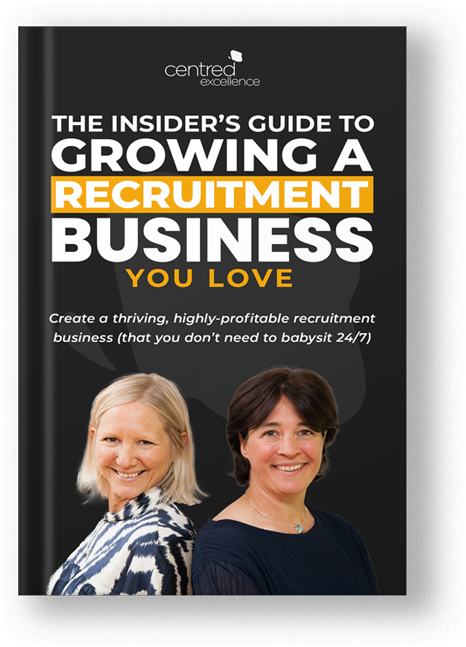

Success modelling in recruitment leadership artfully combines crafted strategies and real-world insights to emulate the behaviours of top performers. Rooted in the foundations of neurolinguistic programming, it helps organisations build resilience and adaptability by following the expert footprints of industry leaders. Leadership actions, wrapped around ethical practices and emotional intelligence, create a culture of excellence and trust. It's not just about copying others; it's about translating success traits into everyday practices that ignite growth and productivity. Think of it as a GPS for reaching recruitment nirvana, guiding you through every turn—with a bit more exploration, the path unfolds further.
Key Points
- Emulating top-performing consultants consistently leads to double and treble-figure growth in recruitment organisations.
- Systematic modelling approaches can transform struggling consultants into high performers by mimicking successful individuals.
- Proven templates and strategies ensure measurable business improvements and recruitment success.
- Leadership development benefits from continuous learning, adaptability, and decision-making skills.
- Ethical leadership and open communication are crucial for building trust and improving team dynamics.
Understanding Success Modelling
A fundamental aspect of success modelling in recruitment is the replication of strategies utilised by top-performing consultants to guarantee consistent results and foster business growth.
Rooted in the principles of neurolinguistic programming (NLP), success modelling emphasises understanding and recreating the excellence of high-performing individuals through their observed behaviours. This approach has been shown to lead to impressive results, with recruitment organisations experiencing double and even treble-digit growth when effectively implemented.
Leadership development within recruitment benefits considerably from this modelling process. By adopting proven strategies and action plans, recruitment leaders can cultivate high-performing teams capable of achieving outstanding results without the need for constant oversight.
It's like giving your team the secret sauce for success, minus the mystery ingredients.
Resources such as insider guides provide a roadmap for leaders to translate the success of top performers into actionable steps. This not only enhances team performance but also instils a culture of continuous improvement.
As they say, why reinvent the wheel when you can just follow a well-trodden path to success? With the right tools and mindset, recruitment leaders can transform their teams into powerhouses of productivity and innovation.
Importance of Established Paths
In recruitment leadership, following established paths can be akin to using a reliable satnav on a road trip; it guides you towards proven strategies for growth and helps replicate success patterns with confidence.
Organisations that embrace these templates for business excellence not only achieve impressive growth but also navigate disruptions with the ease of a seasoned traveller.
Proven Strategies for Growth
Utilising established paths in recruitment leadership is a powerful strategy for achieving significant growth, as evidenced by organisations like Centredexcellence. By adopting proven templates and focusing on successful leadership behaviours, companies can experience remarkable improvements in organisational effectiveness. The success of high-performing recruitment teams often revolves around modelling the actions of industry leaders, ensuring consistent and enhanced performance across the board.
| Strategy | Benefit | Example Organisation |
|---|---|---|
| Proven Templates | Double-digit growth | Centredexcellence |
| Leadership Behaviours | Enhanced team performance | High-performing teams |
| Action Plans | Measurable results | Various organisations |
| Insider Guides | Consistent outcomes | Recruitment leaders |
| Established Paths | Organisational effectiveness | Centredexcellence |
For instance, Centredexcellence showcases how following successful strategies can yield measurable business results, proving that a roadmap of established paths is invaluable. Research supports the idea that utilising the methods of successful individuals in recruitment leads to consistent results. Utilising resources like insider guides and action plans provides actionable insights, allowing recruitment leaders to align their strategies with these proven paths. It's like having a trusty GPS for growth—no more getting lost in the recruitment wilderness! By embracing these strategies, organisations can unleash their full potential, ensuring success is not just a possibility, but a certainty.
Replicating Success Patterns
Frequently, the most effective route to success in recruitment leadership involves replicating established success patterns. These patterns, akin to a trusted recipe, leverage proven strategies that have propelled organisations to impressive growth levels.
Just like a well-baked cake, when you follow the right leadership behaviour, high performance naturally rises. Aspiring leaders can witness significant transformations by modelling the actions of high-performing consultants, addressing underperformance challenges with gusto.
The concept of modelling is more than just mimicking; it's about understanding and adopting the successful behaviours of recruitment leaders. Neurolinguistics programming (NLP) research supports this approach, revealing that observing and imitating successful individuals enhances skill acquisition.
It's like learning to ride a bicycle by watching someone else do it—eventually, you too can pedal with confidence.
Templates for Business Excellence
Beginning the journey towards business excellence often relies on utilising established templates that have been tried and tested in the recruitment industry.
These templates serve as roadmaps, guiding recruitment leaders to emulate successful leadership behaviour and employ effective communication. This approach can lead to remarkable growth, transforming underperformers into consistent achievers.
Here's why established paths are essential:
1. Predictable Growth: Proven templates enable recruitment organisations to achieve double and treble-digit growth by focusing on what works. Instead of reinventing the wheel, leaders can follow a framework that has already delivered results.
2. Simplification: By adopting replicable frameworks, individuals can streamline their operations. This Simplification means more time and energy can be invested in critical actions, leaving less room for error and more for success.
It's like following a recipe—success isn't guaranteed, but it's a lot more likely when you have the right ingredients.
3. Adaptability with Stability: While business disruption calls for adaptability, established methods provide a stable foundation. Leaders can tweak these templates to suit their dynamic environment without losing sight of effective practices.
It's like jazz—you improvise, but within a structure that keeps the music enjoyable.
Research Foundations of Modelling
Research foundations of modelling trace back to the pioneering work of Bandler and Grinder, whose exploration of neurolinguistic programming (NLP) established a systematic approach to replicating successful behaviours and thought processes.
By focusing on modelling, they uncovered how leader behaviours could be emulated to achieve excellence across various fields, including recruitment leadership. Imagine having a magic wand that lets you tap into the success of high achievers—well, that's NLP for you, minus the sparkles.
Studies have shown that when we systematically observe and mimic the methods of successful individuals, we can achieve predictable outcomes. This isn't just academic mumbo jumbo; it's a practical strategy that high-performing teams swear by.
In recruitment, applying these modelling techniques can transform a struggling consultant into a superstar, leading to impressive growth rates—sometimes doubling or even tripling performance metrics.
The secret sauce lies in adopting a consistent approach to modelling successful behaviours. Not only does this boost individual performance, but it also fosters a culture of excellence within recruitment organisations.
Traits of High Performers
In the dynamic world of recruitment leadership, high performers are distinguished by their resilience, adaptability, and strong interpersonal skills, which are essential for navigating the industry's challenges.
Leadership in this field demands a unique blend of emotional intelligence and strategic thinking. High performers possess a growth mindset, embracing failures as learning opportunities to refine their strategies and achieve hiring objectives. They communicate effectively, enabling them to establish strong connections with candidates and clients, which is vital for successful placements.
Moreover, high achievers in recruitment leverage data-driven decision-making to enhance their effectiveness. By analysing trends and metrics, they optimise processes and make informed choices that align with industry standards. Their commitment to self-reflection and feedback fosters continuous professional growth, ensuring they remain at the forefront of recruitment best practices.
Here's a snapshot of the key traits:
- Resilience and Adaptability: Navigating the ever-changing recruitment environment requires the ability to bounce back from setbacks and adjust swiftly.
- Effective Communication: Building rapport with diverse stakeholders is vital for securing placements and fostering long-term relationships.
- Data-Driven Decision-Making: Utilising analytics to identify trends and improve recruitment strategies is a hallmark of top performers.
Essential Growth Resources
While managing the complexities of recruitment leadership, utilising essential growth resources can greatly enhance performance and drive success. Imagine having a toolkit filled with free action plans that provide structured guidance for growth and improvement. These plans can help shape behaviours within teams, leading to higher job satisfaction and a more motivated workforce.
Insider guides offer invaluable insights, enabling leaders to manage effective teams without hovering like a helicopter parent. This autonomy fosters trust and engagement, allowing team members to thrive whilst achieving business goals. It's about finding that sweet spot between steering the ship and letting the crew take charge.
Email subscriptions serve as a continuous stream of tips and strategies, ensuring leaders are always in the loop with the latest industry trends and best practices. It's like having a wise mentor in your inbox, whispering nuggets of wisdom.
Access to cutting-edge research reports, such as CHRO Trends 2024, equips leaders with the knowledge to navigate leadership challenges strategically.
Balancing business success with personal freedom is key. These resources not only keep you informed but also help you maintain sanity amidst the hustle, reminding you that growth and job satisfaction go hand in hand.
Crafting the Success Model
Crafting the Success Model is akin to assembling a jigsaw where all the pieces must fit seamlessly, ensuring leadership expectations are clear and straightforward.
By concentrating on a few essential leadership elements, we avoid turning it into an interminable checklist, which would likely cause any leader's eyes to glaze over.
This model not only aligns with existing competencies but also serves as a trusty compass, guiding organisations to develop leaders who are not just competent but truly exceptional.
Simplifying Leadership Expectations
A streamlined approach to leadership expectations is essential in fostering effective and efficient recruitment leadership. The Success Model simplifies this process by focusing on a concise set of four to five critical leadership elements. This model emphasises outcomes over a lengthy list of competencies, making it easier for leaders to achieve high performance without feeling overwhelmed.
By capturing executives' language through interviews, the Success Model guarantees relatability, enabling leaders to remember and apply it seamlessly.
Imagine the relief of not having to juggle an endless list of competencies, but instead, focusing on what truly matters. The Success Model integrates into organisational processes, offering a framework that:
- Guides candidate interviews – Leaders can pinpoint potential high performers by using clear, objective standards.
- Streamlines onboarding practices – New recruits can quickly align with the organisation's expectations, reducing the time to productivity.
- Serves as a leadership advancement tool – It acts as a screening measure, guaranteeing only those with true leadership potential rise to the top.
Incorporating the Success Model into daily practices not only demystifies leadership expectations but also fosters an environment where high performance becomes a natural outcome.
Aligning Success With Competencies
To effectively align success with competencies, it is essential to establish a framework that connects leadership expectations with key performance elements. The Success Model does just that, prioritising outcomes over a laundry list of competencies. Imagine this: Instead of juggling a dozen balls, you're focusing on four or five. It's about clarity, not chaos. By interviewing executives, the Success Model captures the language and behaviours that set leaders apart, making expectations relatable and simple.
Here's a handy table to visualise the process:
| Leadership Expectation | Key Performance Element | Competency Required |
|---|---|---|
| Drive Results | Increase Efficiency | Strategic Thinking |
| Inspire Teams | Enhance Collaboration | Communication Skills |
| Innovate Continuously | Foster Creativity | Problem Solving |
This model isn't just a theoretical framework; it's a practical tool for candidate interviews and onboarding. It integrates real-life examples, helping new recruits see leadership expectations in action. Aligning it with competency models bridges the gap between broad expectations and specific skills, ensuring everyone is on the same page. So, while the Success Model sets the stage, competency models provide the backstage support, nurturing high-performing leaders across the organisation.
Leadership Influence on Culture
Although often overlooked, the influence of leadership on organisational culture is profound and multifaceted. Leadership influence, especially when grounded in Authentic Leadership, is vital in shaping and sustaining an organisation's core values and norms.
As Edgar Schein (2010) noted, a leader's behaviour can embed values that endure long after their tenure. Emotional interactions and displays by leaders considerably impact the workplace atmosphere, affecting employee morale and engagement levels (Carr et al., 2003). This highlights the power of authentic interactions in crafting a supportive and dynamic culture.
To guarantee leaders positively influence culture, consider these key points:
- Modelling Core Values: Leaders who consistently demonstrate desired behaviours create an environment where those values naturally flourish, much like planting seeds in fertile soil.
- Emotional Climate: Leaders set the tone for emotional engagement, affecting how employees feel and perform, akin to how a conductor guides an orchestra's harmony.
- Charismatic Engagement: Through increased mirror neuron activity, charismatic leaders enhance team performance, making their enthusiasm contagious (Kilduff et al., 2011).
Ethical Leadership and Challenges
Ethical leadership is a cornerstone of a robust organisational culture, setting the stage for integrity and accountability throughout the workplace. When leaders model ethical behaviour, they not only establish standards but also inspire others to follow suit.
Transformational leadership plays a significant role here—by promoting ethical conduct, it boosts employee satisfaction and performance. Imagine a leader who, like a lighthouse, guides employees through stormy seas by embodying the values they preach.
However, challenges abound. Unethical leadership can unravel an organisation, as seen in the infamous Enron scandal, which serves as a cautionary tale. A shocking 50% of employees feel a disconnect between what leaders say and do, leading to distrust and disengagement. It's like watching a magician reveal the trick, only to realise the magic was never real.
Addressing these challenges requires proactive strategies. Training programmes are essential, enhancing leaders' self-awareness and decision-making skills to foster a culture of excellence.
Think of these programmes as the organisational equivalent of a personal trainer—focused on building ethical muscles. By embracing ethical and transformational leadership, organisations can cultivate an environment where trust and performance thrive, making success not just a goal but a shared journey.
Frequently Asked Questions
How Can Success Modelling Benefit Individual Career Growth in Recruitment?
Success modelling enhances career advancement and skill development in recruitment by providing a structured framework for learning best practices, identifying growth opportunities, and setting performance benchmarks, thereby fostering continuous professional growth and increasing overall effectiveness.
What Role Does Communication Play in Effective Success Modelling?
Communication is pivotal in success modelling, as it facilitates active listening and the establishment of feedback loops. These elements guarantee clarity, refine strategies, and foster alignment, ultimately enhancing the effectiveness of achieving desired outcomes.
How Do You Measure the Impact of Success Modelling on Recruitment Outcomes?
To measure the impact of success modelling on recruitment outcomes, conduct an impact assessment using recruitment metrics such as time-to-hire, candidate quality, and retention rates, ensuring a thorough evaluation of effectiveness and areas for improvement.
Can Technology Enhance Success Modelling in Recruitment Leadership?
AI integration and data analytics can greatly enhance success modelling in recruitment leadership by providing insights into candidate selection, streamlining processes, and enabling predictive analytics, thereby improving efficiency and aligning hiring strategies with organisational goals.
What Are Common Pitfalls in Implementing Success Modelling Strategies?
Common pitfalls in implementing success modelling strategies include implementation challenges such as inadequate resources, and strategy misalignment where organisational goals diverge from the modelling framework, leading to ineffective outcomes and diminished leadership efficacy in the recruitment process.
Conclusion
In summary, success modelling in recruitment leadership relies on understanding established paths and the traits of high performers. By utilising research foundations and essential growth resources, a robust success model can be crafted. Leadership not only influences organisational culture but also navigates ethical challenges with grace. Embracing these elements fosters an environment where recruitment leaders can thrive, driving results with integrity and effectiveness. Remember, even in leadership, a little humour goes a long way in keeping teams engaged and motivated.